Leadership is easy when things go smoothly. It’s how you lead when the stakes are high, when uncertainty is rising, and when your team is stretched—that defines your impact.
In my years as a fighter pilot, airline captain, Human Factors professor, and speaker, I’ve seen one truth again and again: Leadership is a Human Factors game.
Even the best systems rely on human performance. And in today’s dynamic environments — healthcare, energy, construction, transportation, manufacturing, and other high reliability teams — leadership must adapt to complexity, uncertainty, and constant change.
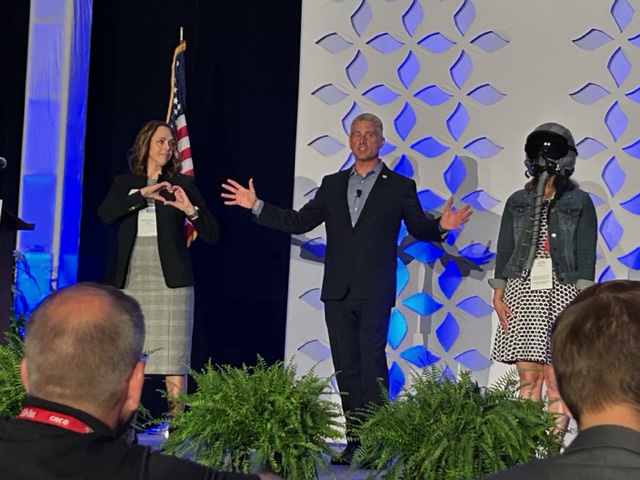
No matter how good your systems and processes are, at the end of the day, it comes down to human performance. Your ability to influence, align, and elevate people — under stress, under time pressure, and in complex environments — is what truly drives outcomes.
In today’s volatile world, leaders can’t rely on command-and-control models. You must build teams that can adapt, think, communicate, and perform — even when the plan falls apart.
Here are 3 leadership principles that I teach high-reliability organizations to help them do just that:
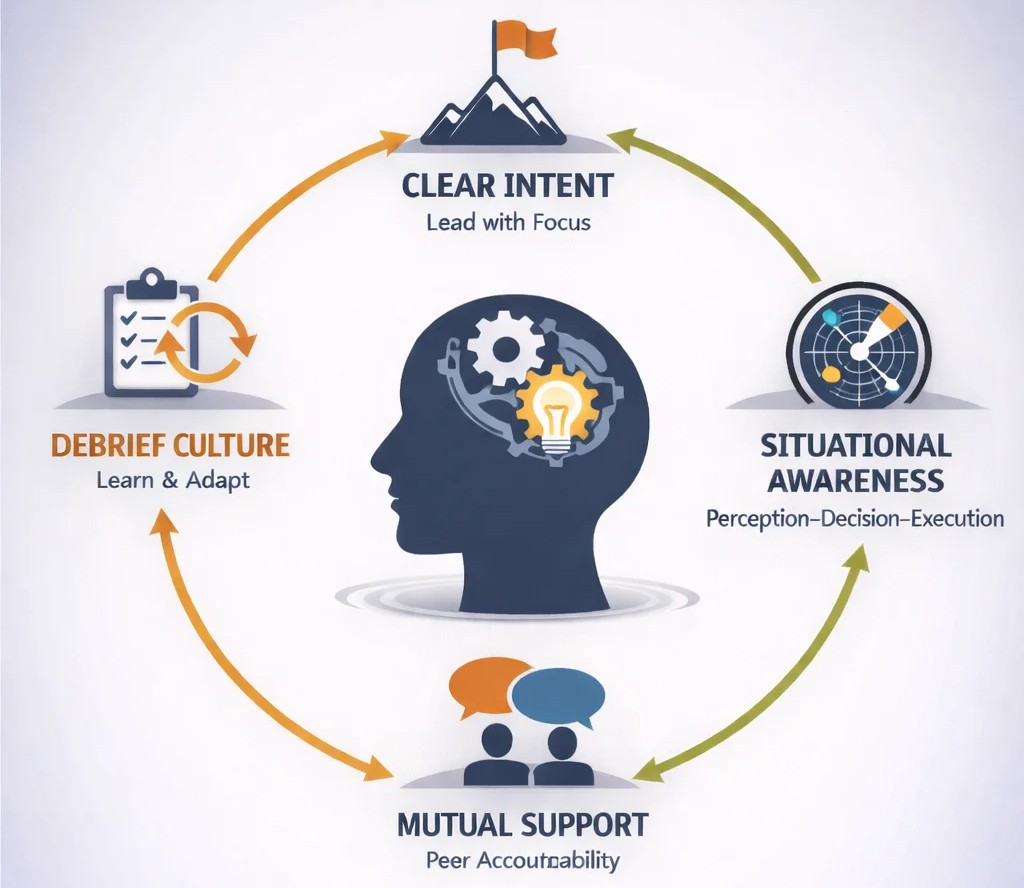
✈️ 1. Clear Intent Leadership Your people need to know not just what to do, but why it matters.
Clear Intent is about providing clarity of purpose, priorities, and desired outcomes.
When your team understands your intent, they can make smart decisions on the edge of execution — where you, as a leader, won’t always be able to tell them what to do next.
👉 Leaders who communicate intent build adaptive, resilient teams that don’t get stuck waiting for orders.
🛡️ 2. Build a Debrief Culture
High-performing teams don’t avoid mistakes—they learn from them faster than anyone else.
After every mission, flight, project, or operation, take time to reflect: What worked? What didn’t? Why? What will we do differently next time?
Leaders must create a safe environment for these discussions—what we call a Just Culture—where people can be open and honest without fear of blame.
👉 This is how you create a culture of continuous learning and improvement—one of the most powerful competitive advantages any team can have.
🤝 3. Mutual Support & Peer Accountability
No leader succeeds alone.
In the air, we always flew with a wingman. On the ground, great teams cultivate that same spirit of Mutual Support—where every member looks out for each other, communicates openly, and takes ownership for team outcomes.
Mutual Support is also about Peer Accountability: the idea that it’s everyone’s job to hold each other to the standard—not just the leader’s.
👉 When leaders foster this kind of trust and ownership, teams elevate performance—especially under stress.

Leadership today is not about having all the answers. It’s about creating an environment where your team can perform at its best—even when uncertainty and complexity are high.
That’s the game. That’s where leadership lives today—in human factors and high-performing team dynamics.
If your organization is ready to strengthen leadership, resilience, and human performance — whether on the job site, in the boardroom, or on the front line — I’d love to help.
✅ Keynotes ✅ Workshops ✅ Coaching
Let’s talk about bringing these lessons to your team.
Stay safe and lead well!

brandon@brandonwilliamsspeaker.com brandonwilliamsspeaker.com
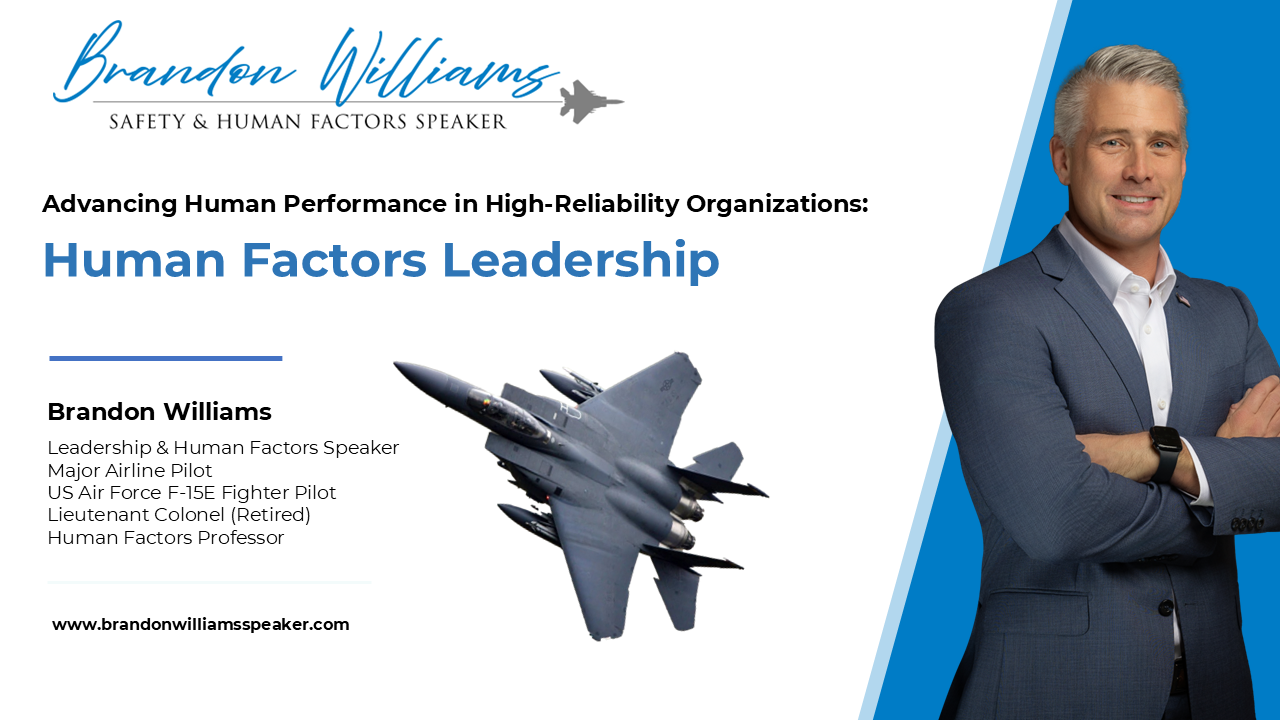
Brandon Williams is a seasoned airline pilot, human factors professor, and former U.S. Air Force Fighter Pilot, Lieutenant Colonel, and Safety Officer with over two decades of experience leading teams in some of the world’s most dynamic, complex, and high-risk environments.
As a recognized expert in Human Factors and organizational leadership, Brandon equips leaders with the tools to build High-Reliability Organizations and High-Performance Teams.
Through powerful keynotes and workshops grounded in military aviation and safety science, Brandon addresses the realities of human error, the importance of system-level thinking, and how to lead in safety when facing uncertainty and complexity.