The landscape of safety leadership is evolving, and Artificial Intelligence (AI) is at the forefront of this transformation. As organizations in transportation, healthcare, energy, manufacturing, construction, and other high-reliability organizations push the boundaries of safety and efficiency, the integration of AI presents unprecedented opportunities to enhance safety culture, decision-making, and program effectiveness.

1️⃣ Predictive Analytics for Proactive Safety
Imagine a system that identifies risks before they become incidents. AI-driven predictive analytics can analyze historical safety data, real-time sensor inputs, and environmental variables to forecast potential hazards. This allows safety leaders to take preventative action—not just reactive measures—saving lives, reducing costs, and building stronger safety cultures.
🔹 Example: Transportation and shipping teams are using AI to predict maintenance needs before equipment failure, preventing accidents and optimizing operations.
2️⃣ Enhanced Situational Awareness
In high-risk environments, situational awareness is non-negotiable. AI solutions like real-time monitoring systems and intelligent video analysis provide leaders with deeper visibility into operations. Potential hazards are detected instantly, empowering rapid, informed decision-making.
🔹 Example: Construction sites now leverage AI to monitor worker movement and machinery, identifying potential collisions or unsafe practices in real-time.
3️⃣ Human Factors Analysis and Error Reduction
AI tools are now capable of mapping out human error trends, providing insights into where breakdowns occur and why. By understanding these patterns, safety leaders can tailor training and process improvements to reduce errors and enhance team performance.
🔹 Example: In healthcare, AI is used to track and analyze potential gaps in surgical procedures and practices, leading to better training and reduced incidents.
4️⃣ Strengthening Just Culture and Accountability
With advanced data insights, safety leaders can foster a stronger Just Culture—where learning is prioritized over blame. AI tools can objectively track incident data, helping organizations shift from punishment to learning and growth.
🔹 Example: AI-driven safety dashboards allow leaders to identify root causes without bias, promoting transparency and trust.
5️⃣ Decision Support and Crisis Management
In moments of crisis, leaders often need to make decisions under extreme pressure. AI-driven decision support systems analyze scenarios in real-time, providing actionable insights to guide leaders toward optimal outcomes.
🔹 Example: Energy companies use AI simulations to manage emergency responses, optimizing decisions under hazardous conditions.

The Future of Safety Leadership is Here
Safety leadership is evolving beyond compliance checklists and reactive measures. By embracing AI, leaders can drive a proactive, resilient safety culture that not only prevents incidents but transforms safety into a strategic advantage.
Are you ready to lead in this new era of safety? Let’s connect and explore how AI can elevate your safety programs to new heights.
www.brandonwilliamsspeaker.com | brandon@brandonwilliamsspeaker.com
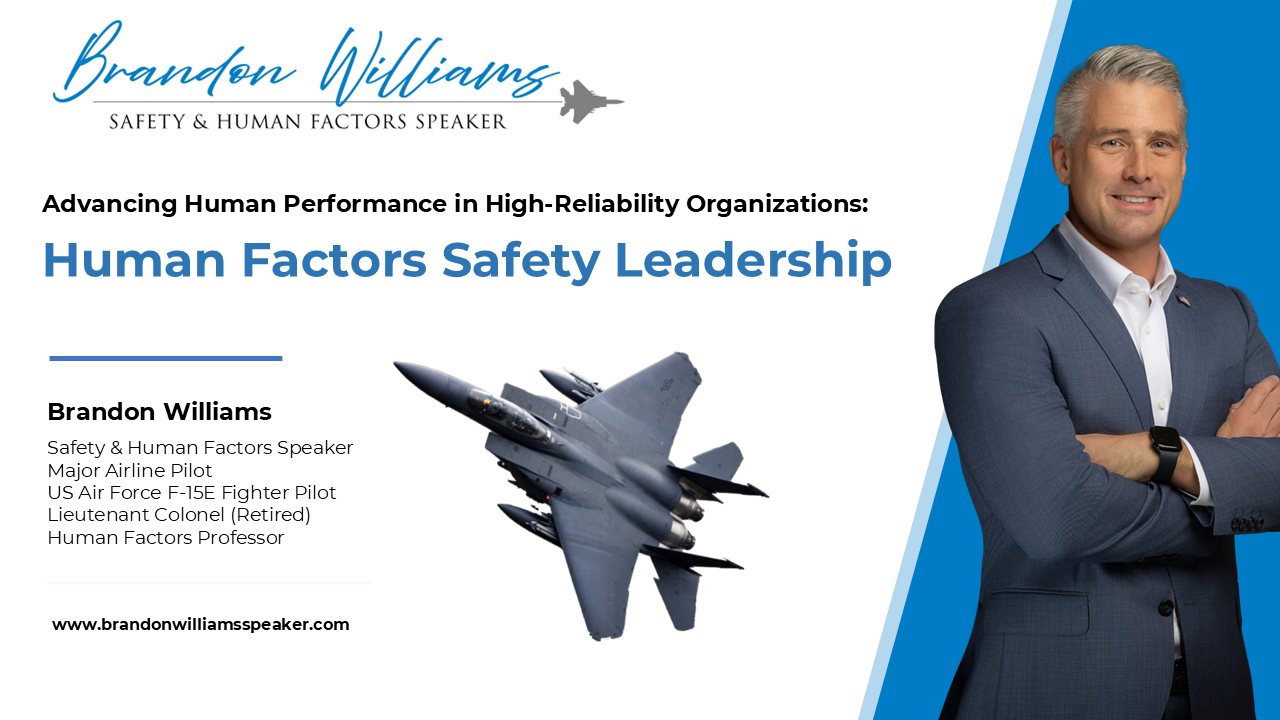
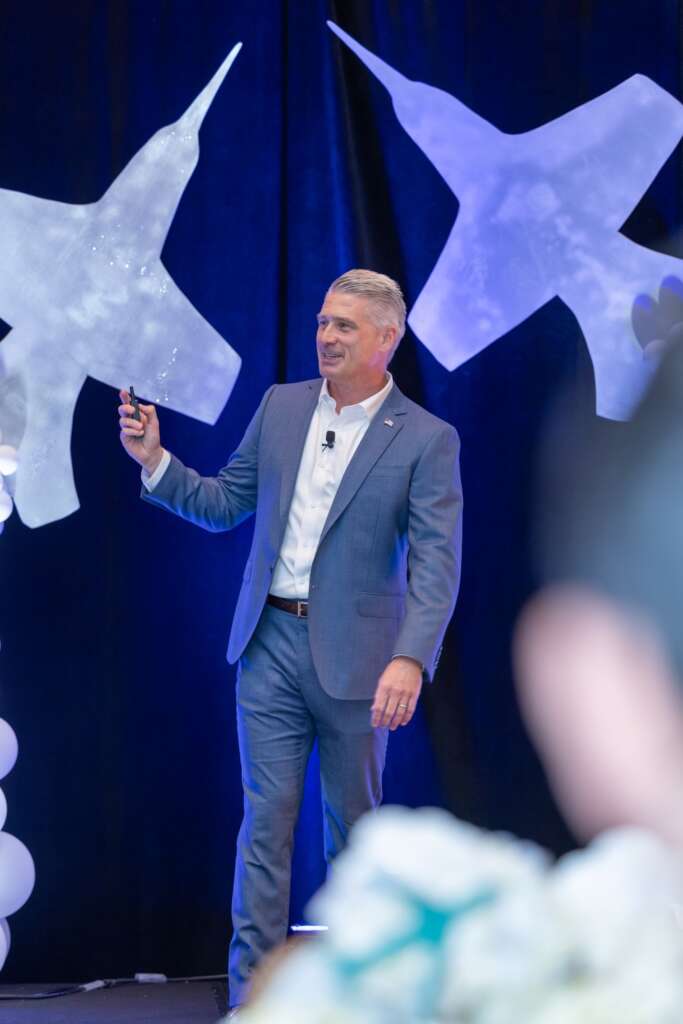
Brandon Williams is a seasoned airline pilot, human factors professor, and former U.S. Air Force Fighter Pilot, Lieutenant Colonel, and Safety Officer with over two decades of experience leading teams in some of the world’s most dynamic, complex, and high-risk environments.
As a recognized expert in Human Factors and organizational safety, Brandon equips leaders with the tools to build High-Reliability Organizations and High-Performance Teams—including transportation, healthcare, energy, construction, and manufacturing.
Through powerful keynotes and workshops grounded in military aviation and safety science, Brandon addresses the realities of human error, the importance of system-level thinking, and how to lead in safety when facing uncertainty and complexity.