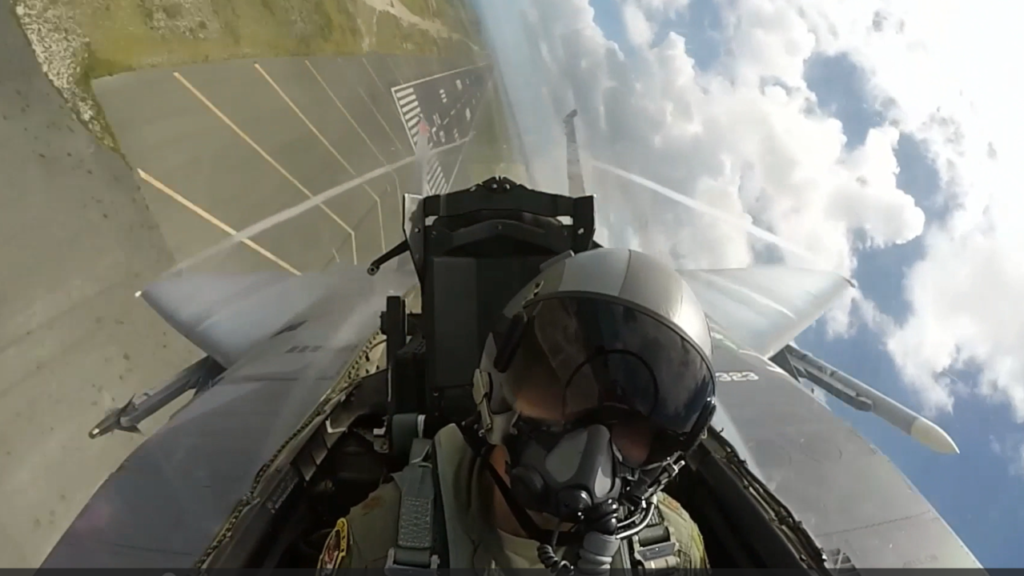
In the cockpit of a fighter jet, where split-second decisions can mean the difference between mission success and failure, teamwork isn’t just important—it’s vital for survival. As organizations navigate increasingly complex and uncertain business environments, we can learn powerful lessons from how fighter pilots operate and what human factors research tells us about peak team performance.
The OODA Loop: A Framework for Dynamic Decision-Making
Fighter pilots operate using a decision-making framework called the OODA Loop (Observe, Orient, Decide, Act), developed by military strategist and fighter pilot Colonel John Boyd. This framework is particularly relevant in today’s fast-paced business environment:
Observe: Pilots constantly scan their environment, instruments, and team communications. In business, this means maintaining awareness of market conditions, team dynamics, and emerging challenges.
Orient: Information must be quickly processed and contextualized. Teams need shared mental models and common understanding to interpret situations consistently.
Decide: Based on orientation, teams must rapidly evaluate options and choose a course of action. Clear decision-making protocols and defined roles are crucial.
Act: Execute the decision with precision while continuing to observe its effects, creating a continuous feedback loop. Great execution only comes from experience and practice.
Trust Through Standardization
Fighter pilots achieve high levels of trust through standardized communication and procedures. Every team member knows exactly what to expect from their colleagues because they:
- Use precise, standardized phraseology. This helps eliminate assumptions and cuts out unimportant, extraneous communication.
- Follow established protocols for all routine and emergency procedures. Through realistic training, habits and best practices are honed PRIOR to execution.
- Maintain strict radio discipline.
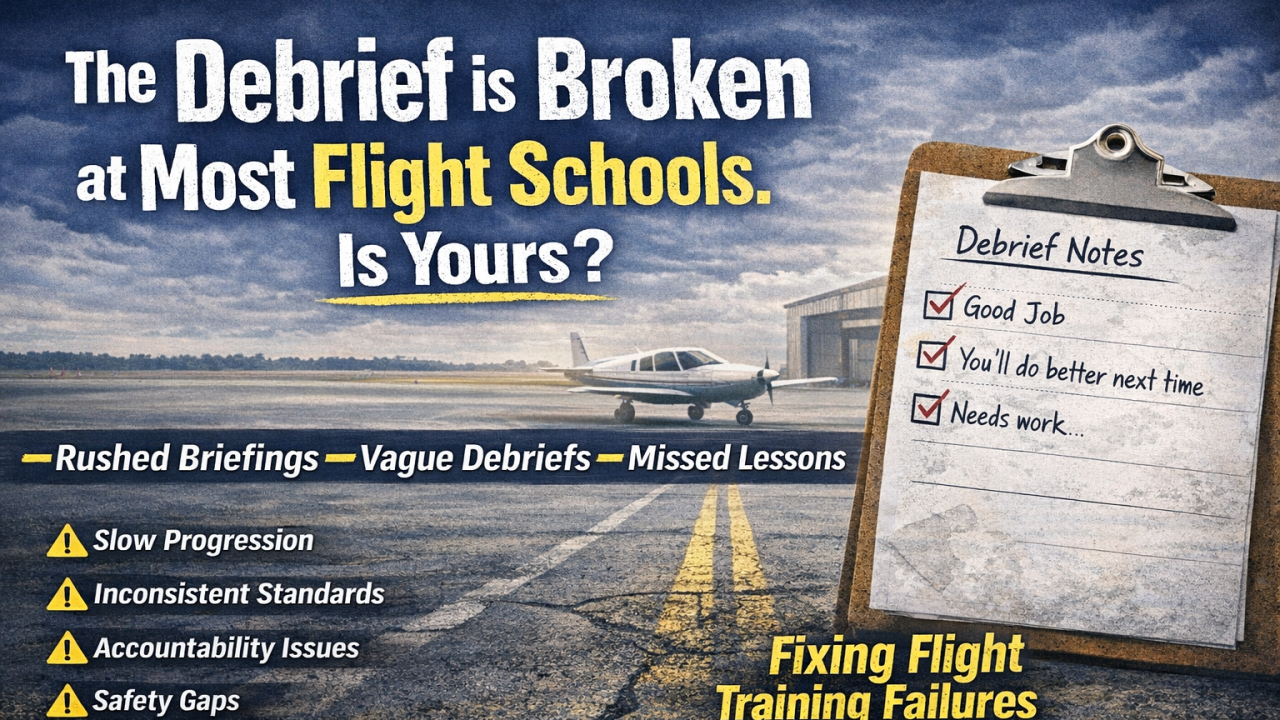
- Conduct thorough pre-mission briefings and post-mission debriefs. Know exactly what is expected before execution, and have a standardized and structured process for debriefing after execution.
This standardization reduces cognitive load and allows teams to focus on managing unexpected challenges rather than basic coordination.
Wingmen: The Power of Mutual Support
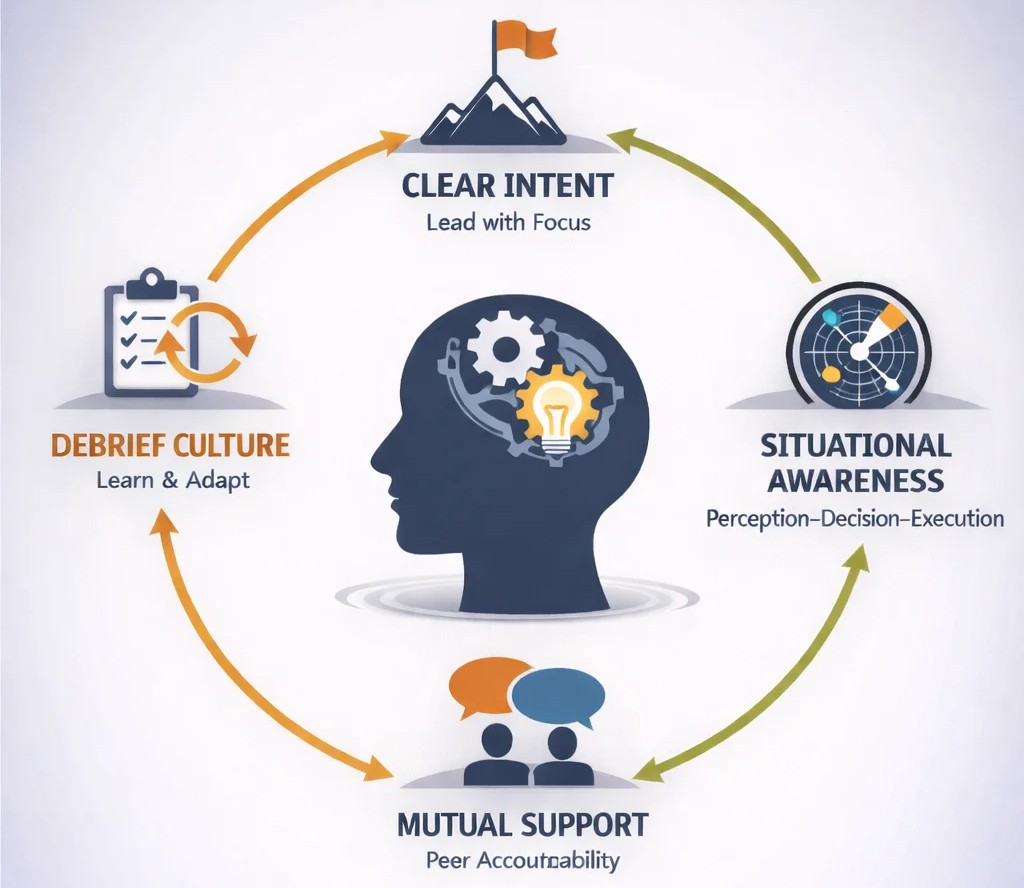
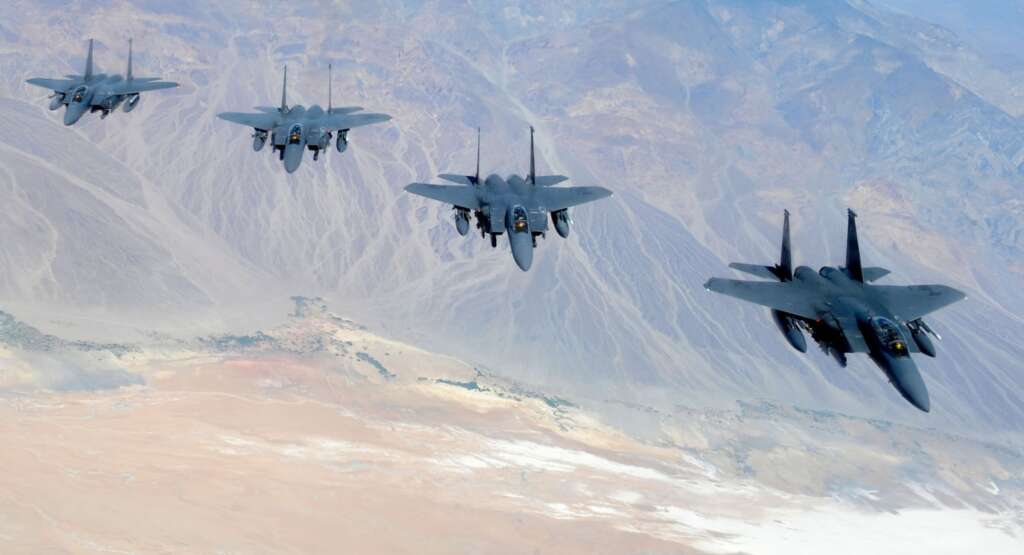
Fighter pilots live by the principle of the wingman concept. By always operating as a formation, a deep-level rooted “mutual support” of accountability is built into the plans and execution. This practice embodies several crucial teamwork principles:
First, it acknowledges that even the most skilled individuals have blind spots. In business, this means creating systems where team members actively support each other, filling gaps in perspective and capability.
Second, it establishes clear communication protocols. Fighter pilots use standardized callouts and responses to ensure critical information flows quickly and clearly. Similarly, high-performing business teams need established communication channels and norms that work under pressure.
Briefing and Debriefing: The Learning Loop
Perhaps the most valuable practice we can adopt from fighter squadrons is their rigorous approach to briefing and debriefing. Before each mission, pilots conduct detailed briefings to align on objectives, roles, and contingencies. After each mission, they participate in “respectful tone of accountability” debriefings where hierarchy disappears in favor of honest feedback and learning.
This creates a continuous improvement cycle that:
- Sets clear expectations and alignment before execution
- Provides structured opportunities for feedback
- Builds psychological safety through shared vulnerability
- Transforms mistakes into learning opportunities
Human Factors: The Science of Team Performance
Human factors research has validated many practices that fighter pilots use intuitively. Key findings that apply to any high-performance team include:
Situational Awareness
Teams perform better when they maintain three levels of awareness:
- Perception of current conditions
- Comprehension of their meaning
- Projection of future states
Communication Load
Research shows that team performance degrades when communication channels become saturated. Fighter pilots address this by:
- Using brief, standardized messages
- Establishing clear priorities for communication
- Creating redundant communication paths for critical information
Stress Management
High-stakes environments create stress that can impair decision-making. Effective teams:
- Train extensively in realistic scenarios
- Develop automatic responses to common situations
- Use checklists and standard procedures to reduce cognitive load
- Practice stress-management techniques

Implementing Fighter Pilot Principles in Business
To apply these lessons in your organization:
- Establish Clear Protocols: Create standardized procedures for routine operations and common challenges. This frees up mental bandwidth for handling unexpected situations.
- Brief-Execute-Debrief: Adopt the military practice of thorough briefings before important activities and honest debriefs afterward. This creates a continuous learning loop and builds team cohesion. It also lays out expectations of each team member’s role BEFORE executing.
- Train for Uncertainty: Develop scenario-based training that pushes teams to handle unexpected challenges. This builds confidence and improves adaptive decision-making.
- Build Trust Through Transparency: Foster an environment where team members can speak up about concerns without fear. Fighter pilots call this a “debrief culture” – it’s essential for preventing errors and promoting innovation. This starts with Leaders displaying their own transparency with missteps and solicitation of inputs/feedback.
The Bottom Line
In both fighter aviation and business, success depends on teams that can make good decisions quickly in uncertain conditions. By applying lessons from fighter pilots and human factors science, we can build more resilient, adaptive, and effective teams.
Remember: The goal isn’t to eliminate uncertainty, but to build teams that thrive within it.

www.brandonwilliamsspeaker.com | brandon@brandonwilliamsspeaker.com
Brandon Williams graduated from the US Air Force Academy, and is an accomplished leadership business speaker, business owner, and adjunct professor in human factors. As a decorated Lieutenant Colonel in the United States Air Force, he led men and women from diverse backgrounds and managed millions of dollars in assets. As an F-15E Fighter Pilot, Brandon flew hundreds of combat hours and missions over the skies of Iraq and Afghanistan, operating in some of the most challenging and dynamic environments imaginable.
Over the past few years, Brandon has built his speaking and coaching business to become an accomplished keynote leadership speaker. Having taught at several universities for almost 15 years as an expert in Human Factors, he leverages his in-depth knowledge of human performance analysis to equip leaders for uncertainty and change.